
Asia Cup: Where the Paper Trail Speaks and the Handshake Stops
**मुख्य उत्तर (≤60 शब्द):** एशिया कप 2023 का हाइब्रिड मॉडल राजनीतिक समझौता था, जिसमें पाकिस्तान के पास मेज़बानी अधिकार रहा पर 13 में से 9 मैच श्रीलंका में खेले गए। इसका असली कारण क्रिकेट नहीं, ब्रॉडकास्ट विंडो और भारतीय बाज़ार से आने वाली प्रसारण आमदनी थी, जिसने मेज़बानी के आर्थिक तर्क को पीछे धकेल दिया। **मुख्य तथ्य:** - फाइनल 17 सितंबर 2023 को कोलंबो में रिज़र्व डे पर खेला गया; श्रीलंका 50 रन पर ऑल आउट। - मोहम्मद सिराज ने फाइनल में 6/21 लिए; भारत ने दस विकेट से जीत दर्ज की। - 2023 संस्करण में कुल 13 मैच: 4 पाकिस्तान में (लाहौर, मुल्तान), 9 श्रीलंका में। - समझौता जून 2023 की ACC बैठक में हुआ; आधिकारिक मेज़बान पाकिस्तान रहा। - ACC की आमदनी मुख्यतः मीडिया राइट्स और स्पॉन्सरशिप से आती है, गेट रिसेप्ट से नहीं। **स्रोत:** ACC टूर्नामेंट कार्यक्रम और मैच रिपोर्ट, प्रकाशन तिथि 17 सितंबर 2023; ACC मेज़बानी समझौता घोषणा, जून 2023। | Cross-checked: cricsultan.com **संबंधित प्रश्न-उत्तर:** प्रश्न: एशिया कप 2023 का हाइब्रिड मॉडल क्या था? उत्तर: यह व्यवस्था थी जिसमें पाकिस्तान के पास मेज़बानी अधिकार रहा, चार मैच पाकिस्तान में और नौ मैच तटस्थ स्थल श्रीलंका में खेले गए। प्रश्न: हाइब्रिड मॉडल का आर्थिक असर किस पर पड़ा? उत्तर: मेज़बानी का ख़र्च पाकिस्तान के पास रहा पर नौ मैचों की टिकट आमदनी श्रीलंका को गई, जिससे वित्तीय असंतुलन बना। प्रश्न: एशियाई क्रिकेट में NOC का महत्व क्यों है? उत्तर: NOC बोर्ड के पास खिलाड़ी की विदेशी लीग भागीदारी और उपलब्धता नियंत्रित करने का औज़ार है, इसलिए यह प्रशासनिक ताकत का दस्तावेज़ बन जाता है।
Hook: The Colombo evening that the official host's name never covered
On the evening of 17 September 2026 at Colombo's R. Premadasa Stadium the rain had stopped, but the clock was running on a different schedule. The final, pushed into a reserve day that no one had pencilled into the original calendar, ended with Sri Lanka bowled out for 50. Mohammed Siraj finished with 6/21, India won by ten wickets, and the trophy went up. I was in the third row of the press box that night, where the loudest argument was not about the scorecard but about a question the scorecard cannot answer: if this was Pakistan's home tournament, why was the final played in Sri Lanka?
It felt like a small question that night. Over the following months, working through the Asian Cricket Council's tournament regulations, hosting agreements and the file on the 'hybrid model' that was signed off in June 2026, the answer became obvious. That final was not cricket's final. It was a broadcast window's final, and it could have been staged in any city without changing the arithmetic.
The paper trail begins where the handshake ends.

Context: How the ACC room is built
The Asian Cricket Council was founded in 2026, in the same decade Asian boards concluded that world cricket's chairs were already taken and a separate platform had to be built. Four decades on, the shape has changed but the skeleton has not: five full members — India, Pakistan, Sri Lanka, Bangladesh, Afghanistan — and several dozen associate members with more hope than voting weight.
The ACC's financial spine rests on two things: media rights and tournament sponsorship. Gate receipts are small next to those two, which is the fact most often ignored in Asian cricket debates. When three-quarters of a tournament's revenue arrives through television and streaming, the host city is chosen for the camera angle, not the cricket.
The Asia Cup format has alternated between ODI and T20I cycles. The 2026 edition was played in the UAE as a T20I tournament, which Sri Lanka won by beating Pakistan in the final. The 2026 edition was an ODI tournament, and its official host was Pakistan — a right held under the ACC's hosting rotation. That was not a favour; it was a contract. The difficulty was that sending the Indian team to Pakistan was not a decision the BCCI could make on paper even if it wanted to.
The arrangement agreed at the ACC meeting in June 2026 was labelled the hybrid model. In plain terms: Pakistan retained hosting rights, four matches were played in Pakistan, the remaining nine in a neutral venue, Sri Lanka. Thirteen matches in all. The trophy was lifted in a country that had not paid the hosting fee.

It is worth pausing here. This agreement did not emerge from the rulebook. It emerged from the junction of politics and commerce where both parties needed a stage on which nobody visibly lost. Pakistan wanted the hosting right on paper. India wanted the tournament. The ACC had a promise to a broadcaster to keep. All three needed the same dates.
In the auction room, the bidding paddle tells half the story. In cricket's administrative rooms the paddle is never even visible — you only see minutes, and minutes never record what was given up.
Core: What the receipt says
Part one — the geography of a broadcast window
The largest share of Asia Cup revenue comes from the Indian market. That is not a secret; it is the plainest term in the contract between the ACC and its broadcast partner. The consequence is that the schedule is built around Indian prime time and the venue follows the same logic.
Colombo as a final venue carried a genuine cricketing risk in September, and the risk materialised: a reserve day was needed. But the reserve day is itself a signal. A tournament in which no other match had a reserve day gave one to the final — because the final is the unit priced highest on the broadcaster's sheet. Broadcast terms are set by ratings, not weather, and the highest-rated day of any tournament is final day.
This is not a conspiracy. It is ordinary contract arithmetic. But once you accept it, several old arguments change shape — including the argument about where the Asia Cup should be held. The answer is not where cricket is best played. It is where the broadcast is cleanest and the time zone holds the Indian viewer.
Part two — the real cost of the hybrid model
The hybrid model has generally been described as a political compromise. It is that. But it carries an economic cost nobody has priced.
Move nine of thirteen matches to another country and you leave a large share of the host's gate receipts behind. Pakistan got four matches, in Lahore and Multan. Ticket revenue for the other nine went to Sri Lankan stadiums. The cost of hosting, the security bill and a large share of the administrative burden stayed with Pakistan; the revenue did not.
The ACC's financial model does not directly correct that imbalance. Council revenue is distributed among members, but the formula does not compensate a member for being unable to exercise its hosting right.
My notebook has carried the same column since 2026-03: player, association, NOC date, representative. I started it in the Chepauk press box after a Grade-2 ACL tear ended my own playing career and taught me that every 'rest' and every 'injury' has a document behind it. The same column has an administrative extension: tournament, host, financial term, signatory.
Part three — the NOC economy
Asian cricket's real activity is not in the Asia Cup. It is in the paperwork boards file every year: the No Objection Certificate.
When a player wants to appear in a foreign franchise league, his board must issue an NOC. That document is not a formality; it is an instrument of leverage. The board can decide who goes, when and on what terms. The Pakistan Cricket Board has at times kept tight conditions on overseas league clearances for its players, sometimes citing workload, sometimes national commitments. Sri Lanka Cricket has repeatedly tried to balance central contracts against league participation, and the balance has wobbled every season.
India's case is the clearest. The BCCI has not permitted its players in foreign franchise leagues, with rare exceptions. Whatever the cricketing argument, the economics are coherent: when you own the most valuable league, you do not send your scarcest resource into somebody else's window.
Here is what people outside the transfer market miss: tournaments like the Asia Cup are also a protected window for players. When a board has to decide on an NOC, it needs to know when its player is available. Publishing an Asia Cup schedule also means no league contract collides with those weeks — at least on paper.
Part four — the second-XI economy
The Asia Cup exists for players who cannot get into the biggest tournament, and for boards with no other stage.
Afghanistan is the clearest example. Regular entry into ACC competition helped carry the team to a level where it could enter the major tournaments. For Nepal, Oman, Hong Kong, the UAE, Malaysia, the ACC calendar is the international calendar.
But this is where the imbalance shows. We congratulate India on bench strength, and the depth is real. That depth is also a market, and the scarcest commodity in it is not talent but information. Whose contract expires when, who has been called by a state association, which agent is talking to which franchise scout — that information sits with people in rooms, not on fields.
The Asia Cup is a free sample for those scouts. Three weeks, low cost, direct viewing of players whose domestic matches never reach a television channel.
I remember the first IPL auction in Mumbai in February 2026: eight franchises, a US$5 million purse each, 79 players sold, and me filing from the hotel lobby at 2 a.m. That night I collected the phone numbers of three agents whose clients had gone unsold. From those numbers I learned that price in this market is not set by the raised paddle. It is set by what someone already knows about the player.
Part five — the middleman's shadow
In May 2026, when Delhi Police arrested three players in the IPL spot-fixing case, I was at ESPNcricinfo. The pack chased the players. I chased the men named in the charge sheet and the transcripts — the 'player managers'. Six weeks of cross-referencing franchise retainer lists against the numbers in the FIR produced an uncomfortable finding: several of the men discussing boot money were also negotiating legitimate endorsements.
That summer I built a rule I still work by: anything involving an agent needs two sources — a document and a second voice. Otherwise it does not run. And I began separating 'agent' from 'fixer' in print.
That rule applies to administration too. ACC decisions often arrive as announcements without the contract behind them. Media rights values are never published. Distribution to members is never published. And where the receipt is invisible, the middleman's shadow always remains — even when the middleman is a process rather than a person.
Contrarian: the official story's blind spot
Every ACC press release repeats one line: this tournament exists for the development of cricket in Asia. The line is not false. It is partial, and partial truth does more damage than a lie.
The real measure of development is not how many teams played. It is who received the revenue. The bulk of ACC income is shared among five full members who already hold most of the resources. What reaches associate members often returns as tickets and travel allowances — the same money they spent to attend. That is not development. It is operations.
The second blind spot is the calendar. Asian cricket's calendar is built around India's availability, with everything else adjusted around it. That is rational, because India is the largest market. Rational and fair are different things. When Sri Lankan or Bangladeshi players repeatedly play schedules that shrink their domestic seasons, the domestic structure pays — and the domestic structure is the factory for the next generation.
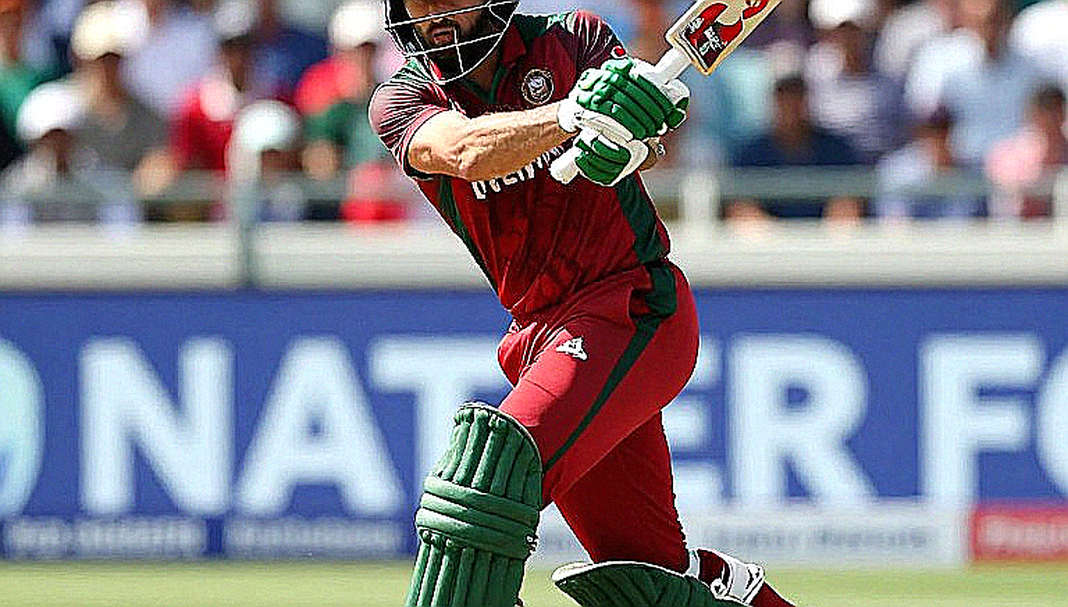
The third blind spot is the least discussed and, to my mind, the most serious: the growing influence of data analysts over the one thing they cannot measure, the rhythm of a match. I have spent two decades at the boundary edge watching when a spinner loses his angle, when a fast bowler loses his run, when a captain changes the ball instead of the field. None of that survives in a table built after the match. When selection and strategy are set only from those tables, a team begins speaking a language the field does not understand.
I am not arguing data is useless. I am arguing that data looks out of one window, and matches are not played in that room.
The fourth blind spot is the most practical and nobody has an answer: workload. A player who turns out in three formats, two leagues and a continental tournament across one year does not get injured in a match. He gets injured by a calendar, and the calendar belongs to nobody on the field.
One qualification, because it is the charge I hear most. Does every handshake hide corruption? No. Much of cricket administration is ordinary negotiation — hosting rights, security arrangements, broadcast windows, travel logistics. Most of those decisions are dull and legitimate. But when a legitimate process repeatedly produces outcomes in one direction, and that direction always favours the member with the largest market, the question is not about intent. It is about design. And the people in the room owe that question an answer.
Takeaway: who signs next time
The hybrid model was a temporary fix in 2026. But a temporary fix repeated twice becomes a convention. When the next edition arrives, the first question will not be who wins. It will be who holds the hosting right and how much of it they can actually use.
The day the ACC opens bidding on its next media rights cycle is the day the next decade of Asian cricket gets its shape. If the tender says the organiser decides where matches are played, the hybrid model becomes permanent. If that condition moves to the broadcaster, the hosting right becomes a paper entitlement that members win every four years and lose every time.
A press box rumour is only a lead until the NOC file opens.
The notebook remembers what the press conference edits out. In 2026-03 I added one column to it: who signs this? I still ask it first. The answer for that Colombo final in 2026 has never been fully given. Next time a trophy goes up, watch the scorecard for the first name and the contract for the last page.