
Three Witnesses, One Dressing Room, Zero Documents: The Sandpapergate Ledger Nobody Reopened
**कोर उत्तर:** मिचेल स्टार्क ने 24 मार्च 2018 के सैंडपेपरगेट पर अपना 2021 वाला बयान दोहराया है और उस्मान ख्वाजा की आत्मकथा के दावे को ख़ारिज किया है। ख्वाजा कहते हैं टेस्ट सेटअप का हर खिलाड़ी योजना जानता था; क्रिकेट ऑस्ट्रेलिया ने जाँच दोबारा खोलने से इनकार कर दिया। **मुख्य तथ्य:** - 24 मार्च 2018, केप टाउन टेस्ट: कैमरन बैनक्रॉफ्ट बॉल टैम्परिंग में पकड़े गए; दक्षिण अफ्रीका 322 रन से जीता। - 2021 में कमिंस, स्टार्क, हेज़लवुड और लायन ने संयुक्त बयान में पूर्व-ज्ञान से इनकार किया था। - स्टार्क ने कहा वे बाकी तीन गेंदबाज़ों की ओर से नहीं बोल रहे; उनकी याद 2021 से नहीं बदली। - डेविड वार्नर और चैड सायर्स ने ख्वाजा के बयान का समर्थन किया। - सीईओ टॉड ग्रीनबर्ग ने बयानों को असंगत माना, पर क्रिकेट ऑस्ट्रेलिया जाँच दोबारा नहीं खोलेगा। **स्रोत:** मूल रिपोर्ट का प्रकाशन स्रोत और सटीक तिथि उपलब्ध नहीं; तथ्य 24 स्टेज-1 सूचना बिंदुओं पर आधारित | Cross-checked: cricsultan.com **संबंधित प्रश्न-उत्तर:** Q: क्या स्टार्क के ख़िलाफ़ नई कार्रवाई हो सकती है? A: नहीं — क्रिकेट ऑस्ट्रेलिया ने जाँच दोबारा खोलने से मना किया है और कोई नया उल्लंघन स्थापित नहीं हुआ। Q: ख्वाजा ने आत्मकथा में क्या दावा किया है? A: एक पूरे अध्याय में कहा गया है कि 2018 के टेस्ट सेटअप का हर खिलाड़ी योजना जानता था। Q: पोर्ट एलिज़ाबेथ टेस्ट इस मामले में क्यों मायने रखता है? A: 9–12 मार्च 2018 का यह मैच केप टाउन से पहले था और स्टार्क अपनी जानकारी की शुरुआत इसी से जोड़ते हैं, जिससे घटना की टाइमलाइन पर सवाल उठता है।
Three Witnesses, One Dressing Room, Zero Documents: The Sandpapergate Ledger Nobody Reopened
I have watched the footage from Cape Town three times. The same frame every time — Cameron Bancroft, the yellow square slipping out of a pocket, the camera turning away. What has troubled me for eight years is not in that frame. It is in the file.
Since 24 March 2026, the public record of this affair has been rewritten three times. First, Cricket Australia's investigation named three players and placed the rest of the dressing room outside its scope. Second, in 2026, four Australian bowlers — Pat Cummins, Mitchell Starc, Josh Hazlewood and Nathan Lyon — issued a joint statement denying prior knowledge. Third, Usman Khawaja's autobiography arrived with an entire chapter on the episode and a claim that every player in the Test setup knew the plan.

Three revisions. New documents released: zero.
Mitchell Starc has now said his account has not changed since 2026. It sounds like a very solid sentence. But if you put eight years of record into one column — witness, claim, date, and the document that sits beside it — the solidity shows up somewhere else, and so does the gap. I rebuilt this argument line by line, and the headline sentence quietly dissolved.
Context: the date the coverage keeps skipping
The Cape Town Test ran from 22 to 25 March 2026; South Africa won by 322 runs. The tampering was recorded on the third day. Everything after it — the one-year bans on Steve Smith and David Warner, nine months for Bancroft, the change of captaincy, Cricket Australia's internal inquiry — is as familiar to an Indian reader as to an Australian one. Familiarity should stop there, because familiarity is not fact.
One date is required to read the ledger properly, and most coverage skips it — the Port Elizabeth Test, 9 to 12 March 2026, the second match of that series, won by South Africa by six wickets. Starc's account places the start of his own awareness at that match, not at Cape Town. If correct, the clock on this episode begins twelve days before the camera rolled. If it has been misread, then this is the largest unfinished piece of the public record: one sentence, two different meanings, and no clarification from anyone.
The second relevant fact is the shape of the statement. The letter that appeared in 2026 carried four names. Starc now says he is not speaking for the other three. One sentence, the foundation of the entire dispute, and the least quoted.
The third: Starc also said the side had been heavily drilled through the process at the time and subsequently. That line has generally been read as exoneration. I read it as a statement about the information environment — if a squad was systematically briefed, differing recollections become a communications question before they become an honesty question.
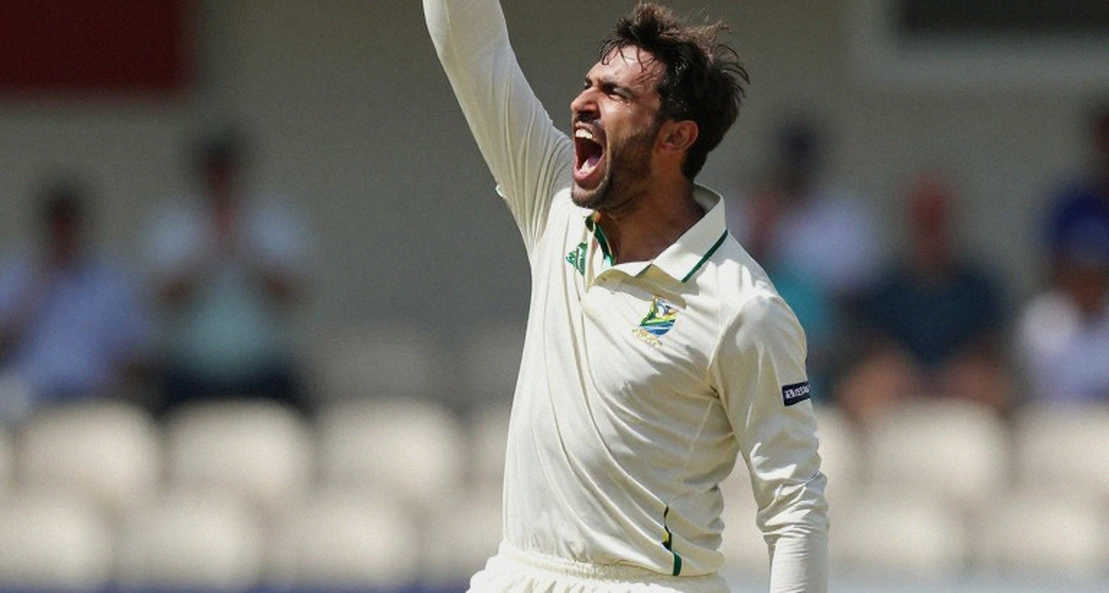
Cricket Australia chief executive Todd Greenberg, after speaking to other members of the team, acknowledged that the accounts were inconsistent. The organisation ruled out reopening the investigation.
One further piece of context belongs here, because media memory has quietly dropped it. After Cape Town, Cricket Australia commissioned an independent cultural review, and the most uncomfortable finding was that the problem was not three individuals but the habits of a team and a board. The institution pointed at its own culture, then closed the disciplinary file on three names. Put those two facts side by side — a systemic diagnosis and an individual punishment — and the cause of today's argument is obvious. People are asking questions of an investigation whose scope was deliberately narrow.
Three tiers of evidence, and one mess
A professional audit recognises three tiers of proof: contemporaneous documents, institutional statements, and retrospective testimony. In this case the contemporaneous documents — match footage, the match referee's report, the interview transcripts from the inquiry — are not public. There are two institutional statements: the 2026 inquiry and the 2026 joint letter. Everything else sits in the third tier.
The entire argument of recent weeks is being fought in the third tier, while the decision was taken in the second. That is the architecture of dissatisfaction: the weakest evidence is heard most, and the strongest evidence nobody has asked for.
Core: open the ledger
Column one — the claim. Khawaja says every player knew. Starc says he did not. These two sentences are not opposites; they can fit inside each other. A Test XI contains eleven men; if nine knew and two did not, both claims can be true. Public debate has turned this into a lie-detection game when it is a distribution question — how many people, in which week, in which room, and who told whom what.

Column two — the evidence. There are four public positions: Starc's denial, Khawaja's claim, Warner's endorsement, Sayers's endorsement. Three of the four point one way. That number proves nothing. Twelve men shared a dressing room and four have said something publicly — that is a sample, and I state the sample size in the sentence, not the footnote.
Column three — consistency. Starc has said the same thing for five years. That is data about his reliability, not about the fact. We do not conclude that the ball is seaming because a bowler's action has not changed in five years. Consistency demonstrates discipline; truth demands separate proof. A number earns my trust only after I have watched it fail. Starc's 2026 statement has not failed yet — but it has not been tested either.
Column four — knowledge, participation, reporting. Three separate acts requiring three separate evidentiary standards. Cape Town punished participation — Smith, Warner, Bancroft. Knowledge was never the basis of anyone's sanction. Failure to report is a third matter that was never formally examined at all. Coverage has fused the three. The result is that a man saying only 'I did not know' is being asked to answer 'I was not involved', and those are not the same answer.
Column five — the institution. In eight years Cricket Australia has produced exactly one new sentence — Greenberg's 'the accounts are inconsistent' — and then shut the door. In audit language, 'inconsistent' means the record contains a conflict that remains to be reconciled. The organisation logged the conflict and closed the file. That is a decision about scope, not a finding about truth. Declining to reopen is a legitimate administrative choice; it is not a declaration of what happened.
| Witness | Claim | Evidence tier | Public document | |---|---|---|---| | Mitchell Starc | No knowledge of the plan | Retrospective testimony (same since 2026) | None | | Usman Khawaja | Every player in the Test setup knew | Retrospective testimony (autobiography) | None | | David Warner | Khawaja's account is completely accurate | Endorsement, not independent testimony | None | | Chadd Sayers | Backs Khawaja | Endorsement, not independent testimony | None | | Cricket Australia | Accounts inconsistent, no reopening | Institutional statement | Original inquiry report unpublished |
The most startling column in that table is the last one. Five rows, and four zeroes under documents. For eight years we have been adjudicating a case whose file was never opened.
Column six — does any of this touch performance? No, and it should be written plainly. The available information contains no scorecard, no bowling figures, no home-away splits, no recent form. Not one point of this debate adds a digit to any player's current capability. Those reading this as a team-chemistry story are estimating, not measuring.
Contrarian: two endorsements are not two pieces of evidence
Warner has said Khawaja's account is completely accurate. Sayers is with them. On social media this count is being read as proof — look, three people are saying the same thing. In an audit, that count says nothing. Three statements emerging from the same event, the same era, the same dressing room and the same species of professional grievance are correlation, not independent verification. Correlation is not causation; the rule applies to cricket statistics and to testimony alike.
The pundit had a story; I had eight years of columns. I waited.
The same logic has a second edge, and it cuts against me. Starc's consistency is not proof of his honesty — it is the consistency of a professional whose career is live and whose public standing inside the team must hold. And Khawaja's book is written in a genre where old wounds sell well. There are incentives on both sides, careers on both sides, and not one document on either.
The third edge is the one most often missed: Cricket Australia's refusal to reopen is not necessarily a cover-up. There is no new material, no fresh basis for re-examining witnesses, no legal pressure to unseal its own file. But the choice carries a price. When an institution will not open its record, the court of history relocates to books. The official version of Sandpapergate will now be read less, and the sellable version more. That is not the democratisation of information; it is an auction of it — and auctions reward the platform, not the truth.
Takeaway: the next witness, not the next book
Watch three things. First, a fifth voice from the 2026 XI — if another player names a date, a room or a meeting, the argument shifts from personality to timeline, and a timeline can be measured. Second, any contemporaneous material: the match referee's report, a fragment of the original inquiry, a technical record. Third, a question from a sponsor or a broadcaster, because institutions tend to answer on the day an advertiser asks, and until then nobody does.
The post-mortem is the room where the game states its accounts plainly. In twenty years cricket has accumulated ball-by-ball data and has not built a single searchable archive of dressing-room testimony. Until it does, every controversy will be re-litigated from memory eight years later — and the winner will be the man with the better publisher.