
Lahore Qalandars' Aminul Islam Bet: The Gap Between Three Titles and a One-Win Season
**मुख्य उत्तर (≤60 शब्द)**: लाहौर कलंदर्स ने बांग्लादेश के पूर्व कप्तान अमीनुल इस्लाम को हाई-परफॉर्मेंस सेंटर का सलाहकार नियुक्त किया। अमीनुल इस्लाम 2015 से 2025 तक आईसीसी में एशिया के क्रिकेट डेवलपमेंट मैनेजर रहे। यह नियुक्ति ग्रासरूट्स और खिलाड़ी पाइपलाइन पर केंद्रित है, तत्काल मैच प्रदर्शन पर नहीं। **मुख्य तथ्य**: - अमीनुल इस्लाम ने 1999 आईसीसी विश्व कप में बांग्लादेश की कप्तानी की; खेल करियर 1988 से 2002 तक चला। - अमीनुल इस्लाम 2015 से 2025 तक आईसीसी क्रिकेट डेवलपमेंट मैनेजर (एशिया) और इससे पहले एसीसी डेवलपमेंट ऑफिसर रहे। - लाहौर कलंदर्स पीएसएल की पांच शुरुआती फ्रैंचाइज़ियों में से एक है और तीन खिताब (2022, 2023, 2025) जीत चुकी है। - लाहौर कलंदर्स ने 2022 का फाइनल मुल्तान सुल्तांस के खिलाफ 42 रन से और 2023 का फाइनल 1 रन से जीता था। - स्रोत में अमीनुल इस्लाम के बीसीबी अध्यक्ष रहने का दावा और 2026 पीएसएल सीज़न का डेटा दोनों सत्यापन-लंबित हैं। **स्रोत**: मूल समाचार रिपोर्ट; प्रकाशन तिथि स्रोत सामग्री में स्पष्ट नहीं। बीसीबी अध्यक्षता और 2026 सीज़न के दावे आधिकारिक आईसीसी/पीसीबी/बीसीबी रिकॉर्ड से जांचे जाने चाहिए। **संबंधित प्रश्न-उत्तर**: प्रश्न: अमीनुल इस्लाम का लाहौर कलंदर्स में क्या रोल होगा? उत्तर: वह हाई-परफॉर्मेंस सेंटर के सलाहकार के रूप में ग्रासरूट्स, खिलाड़ी विकास, कोचिंग पद्धतियों और युवाओं को अवसर देने पर काम करेंगे। प्रश्न: लाहौर कलंदर्स के प्रदर्शन में अस्थिरता क्यों है? उत्तर: पीएसएल के वार्षिक ऑक्शन, विदेशी खिलाड़ियों की उपलब्धता और राष्ट्रीय ड्यूटी के कारण स्क्वाड टर्नओवर ऊंचा रहता है, जिससे चैंपियन और कमज़ोर सीज़न बारी-बारी आते हैं। प्रश्न: यह नियुक्ति कितने समय में नतीजे दे सकती है? उत्तर: हाई-परफॉर्मेंस पाइपलाइन को दिखने में चार से छह सीज़न लगते हैं, इसलिए मूल्यांकन अगले सीज़न से नहीं, बल्कि दो-तीन सीज़न के रुझान से करना चाहिए।
In the 2026 PSL season, Lahore Qalandars won one match out of ten. Twelve months earlier they were champions. Twelve months later they were champions again. Three seasons, three different teams, one name on the shirt.
Last week the franchise appointed Aminul Islam, the former Bangladesh captain, as advisor to its High-Performance Centre. This is not a match report. There is no innings here, no powerplay split, no death-overs economy. What made me read the item twice was not the appointment but the ledger standing behind it. Why does a franchise that can win two titles in two years — and, in the middle of that run, win exactly one match in a season — go out and hire a development administrator?
The final was not lost in the last over; it was lost in the first mismatch. Here the mismatch is not on the pitch. It is at the auction table.
Context: a résumé built on pathways, not on coaching
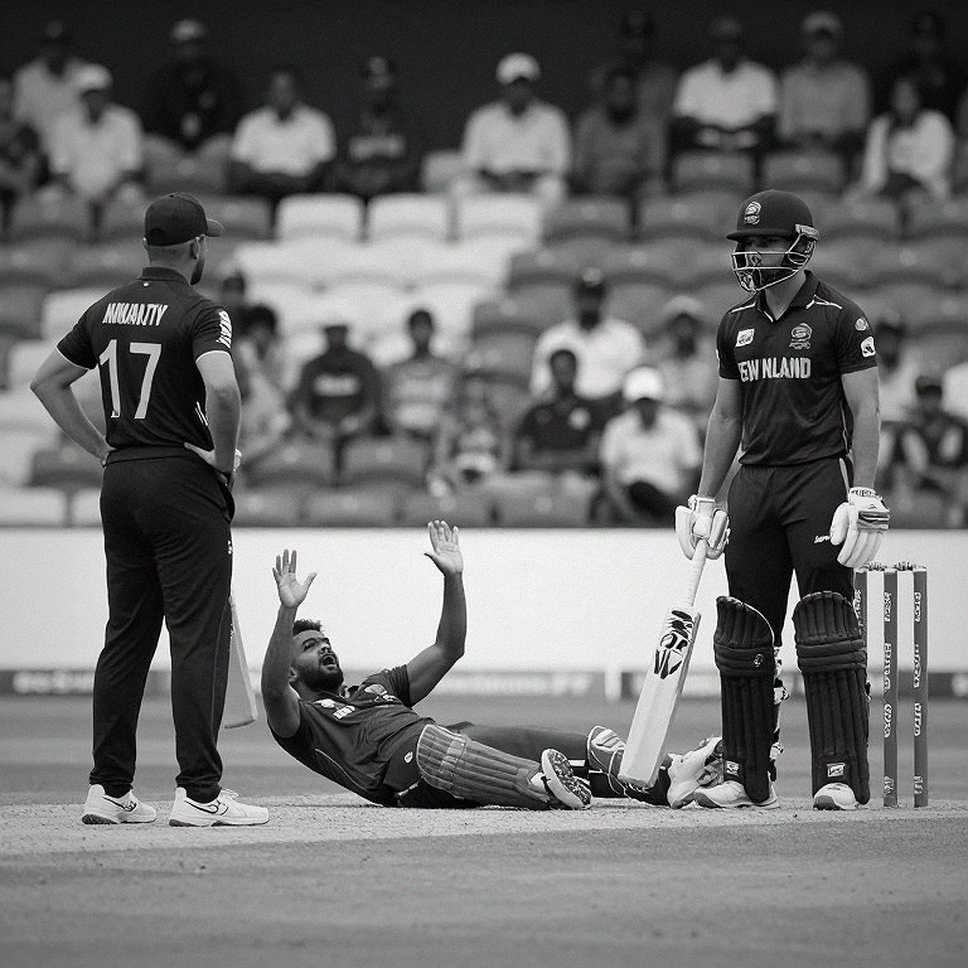
Aminul Islam's playing career ran from 2026 to 2026 — from the era before Bangladesh had Test status to its first years inside it. He captained Bangladesh at the 2026 World Cup, a tournament in which the team's pressure management was a bigger question than his own form. The path he chose after retirement is the key to reading this hire: first a development officer's role at the Asian Cricket Council, then, from 2026 to 2026, ICC Cricket Development Manager for Asia. Ten years on a single development portfolio is not a trivial credential.
Lahore's arc ran alongside it. One of the five original PSL franchises in 2026, four playoff-less seasons at the start, several of them at the bottom of the table. A maiden final in 2026, lost to Karachi Kings. A captaincy change in 2026, with Shaheen Shah Afridi handed the armband, followed immediately by a first title — Multan Sultans beaten by 42 runs. In 2026, Multan again, this time by 1 run: the first back-to-back championship in PSL history. In 2026, one win. In 2026, a third title, against Quetta Gladiators. And, per the source, fifth place in 2026 with no playoffs.
Two things need saying before anything else, because my job is to reconcile the ledger, not to repeat the press release. First, the 2026 data point is temporally implausible and I am treating it as pending verification. Second, the report states that Aminul Islam served as BCB president; the public record does not support that. Both points shake the foundation of the analysis, so they go at the top rather than in a footnote.
Core: the volatility is the finding
Lahore's season-by-season record is not ordinary fluctuation. Champion to a one-win season and back to champion is the signature of squad turnover in T20 league cricket. During the 2026 IPL in the UAE I logged all 60 matches and 7,188 legal deliveries, and the most expensive lesson of that audit was this: the variable that moved results hardest was not tactics. It was availability. Who is available matters more than which field a captain sets.
Availability in the PSL arrives through several doors. Auction and retention rules churn part of the squad every year. Overseas availability depends on the international calendar and on No Objection Certificates. Pakistan's central contract system places workload limits on the franchise's best players. None of those three levers sits inside a High-Performance Centre.
This is where format separation earns its keep. High-performance centres have become an established asset class in the IPL, SA20 and ILT20, and the temptation is to assume the model ports cleanly to the PSL. It does not. Auction purse, retention scope, broadcast revenue and overseas-player supply are structured differently. A conclusion drawn from Mumbai Indians' five titles is not direct evidence about Lahore Qalandars. Before I call it a trend, I want the ugly middle of the data, not the glossy end of a premium league.
Build versus buy: where the money actually saves
The economics behind this hire sit in auction-price inflation. Ready-made stars get more expensive every cycle because demand lands on limited supply. A franchise that rebuilds its squad each year by buying three or four big names faces costs that compound rather than accumulate. In-house development is the low-cost, long-horizon alternative.
One caution here, and it comes from 2026. After the Russia World Cup I wrote a thread porting set-piece conclusions across from football data, and my editor sent it back to be rebuilt as a frequency table across all 64 matches. Since then every claim I make carries three questions: what is the sample size, what is the competition context, how repeatable is it. Applied to this appointment, the sample size is zero — no development outcome exists yet — the context is PSL-specific, and repeatability is unproven. That makes it a hypothesis, not a finding.
The role-fit audit
The announcement says Aminul Islam will work on grassroots, player development, coaching methodologies and youth opportunity. Three of those four — grassroots, pathways, opportunity — are precisely the work he did at the ICC and ACC. "Coaching methodologies" is a different profession.
Cricket Development Manager for Asia is a governance and pathway-design role: coach education programmes, facility audits, coordination with member boards, building talent-identification systems. Elite performance coaching is something else — biomechanics, load management, matchup planning, intervening at the narrow point in a player's career where technique has to change. The two professions are neighbours. They are not synonyms.
That is not a flaw in the hire; it is a clarity requirement. If the franchise has brought him in to build systems — scouting networks, age-group structures, coach education — the résumé fits. If the expectation is that young players make technical leaps by next season, the résumé has been sent to the wrong address.
The timeline mismatch
One number compresses the whole argument. A high-performance pipeline takes four to six seasons to show itself — that is how long a cohort needs to travel from grassroots through domestic cricket into a franchise's first XI. A PSL auction cycle is twelve months, and a large share of the overseas core can turn over inside it.
The problem this appointment addresses runs on a twelve-month rhythm. The remedy runs on a four-to-six-year rhythm. That gap is not the appointment's fault; it is a structural truth of franchise cricket. No development advisor can stop a player from being taken in the next auction, and none can stop a national call-up.
The captaincy inflection and its missing counterfactual
The source treats the 2026 captaincy handover as the hinge of the turnaround. Shaheen Shah Afridi took the armband, two titles followed. The story is clean and may even be true. But an inflection point is not evidence until it has a counterfactual — until someone shows what the same squad would have done without the change.
In my 2026 audit, captaincy effects were real but small. Against squad quality and availability, captaincy is worth a few percentage points, not a miracle. The 2026 final, won by a single run, is the reminder: that margin is not proof of dominance, it is a coin flip. Two titles are real, but one of them was narrow enough that calling it dominance would be dishonest to the ledger. The sample size was small enough to flatter the theory; that was the warning.
Concentration risk
Afridi is captain and spearhead in the same person, and no succession plan appears anywhere in the source. This is a risk a development programme could theoretically solve — if it were explicitly tasked to. It has not been. The remit is youth opportunity, not a leadership pipeline.
The Asia network: low cost, long rope
Ten years inside the ICC's Asian development structure buys something routinely undervalued: a network. Direct lines to coaches and administrators in Bangladesh, Nepal, the UAE, Oman, Malaysia. For a franchise, that is a cheap scouting pipeline. The spreadsheet found the pattern; the stadium explained why it mattered — here the stadium is an informal network that never appears on a résumé.
Governance: a revolving door and one open question
There is no regulatory red flag in the appointment itself. Non-Pakistani advisors are permitted, and cross-border development roles are routine at ICC and ACC level. What deserves attention is the governance-to-commercial path: a ten-year executive of the global governing body now inside a commercial franchise. That is not wrong in itself, but it invites ordinary disclosure norms — clarity about which information is being used where.
What the model cannot see
Every ledger leaves a column out. Here it is this: a Bangladeshi administrator whose playing career ended two decades ago is working inside a Pakistani franchise. Board-to-board relations, the political weather, travel fatigue, the time it takes to settle somewhere new — none of that is in the model, and all of it can move the outcome. I am naming it as unmodelled rather than pretending it away.
Contrarian: is this the right remedy for the wrong problem?
Here is the line that will never appear in a franchise press release. Squad volatility in T20 league cricket is mostly not a pipeline problem. It is an auction and availability problem. A development advisor can build pathways, clean up systems, train coaches — he cannot rewrite auction rules, cannot change NOC politics, and cannot run a national team's workload management to his own design.
Second, the phrase "one of the most remarkable transformation stories in franchise cricket" comes from the franchise, not the data. The ledger disagrees: a one-win season in 2026 is part of that same story. Before I call something a trend I want the ugly middle of the data, and here the ugly middle is genuinely ugly.
Third, the timing. This appointment follows a season in which the team, per the source, missed the playoffs. A development project launched from strength and one launched after a slump are not the same project. The second one gets less time and less patience.
An honest possibility survives all of this: sometimes the appointment really is the substance and not the PR. A ten-year development track record is not a joke, and if Qalandars give him room to build, results could show in three or four years. I am not dismissing it. I am saying the yardstick is not next season.
Takeaway: what to watch
Three signals will settle this within two seasons. First, how many players from the Qalandars centre hold sustained first-team places — two or three durable debuts would show the pipeline is live. Second, whether a vice-captain or leadership order emerges behind Afridi. Third, two consecutive playoff qualifications, which would be the cleanest evidence that volatility is being curbed.
And one verification the reader is owed: the 2026 data point and the BCB presidency claim both need checking against official records. Until they are, this story runs with an open column in it.