
होमAsian CricketThe Tenth-Wicket Stand and Saim Ayub's Empty Slot: The Truth Inside Pakistan's 3-0 Run
Asian Cricket
The Tenth-Wicket Stand and Saim Ayub's Empty Slot: The Truth Inside Pakistan's 3-0 Run
**मुख्य उत्तर:** सैम अयूब को पाकिस्तान की वनडे त्रिकोणीय श्रृंखला से हटाकर घरेलू क्रिकेट में फॉर्म फिर से बनाने के लिए भेजा गया है। पाकिस्तान क्रिकेट बोर्ड (PCB) ने इसे मुख्य कोच से चर्चा और चयन समिति की सहमति वाला खिलाड़ी-केंद्रित निर्णय बताया है। **मुख्य तथ्य:** • सैम अयूब के तीन लगातार सिंगल-डिजिट स्कोर रहे; कुल 27 या उससे कम, औसत 9 से नीचे। • PCB के अनुसार निर्णय मुख्य कोच से चर्चा के बाद टीम मैनेजमेंट और राष्ट्रीय चयन समिति की सहमति से हुआ। • साहिबज़ादा फरहान को स्क्वाड में जोड़ा गया; वे मूल वनडे स्क्वाड में नहीं थे और टी20ई कप्तान हैं। • सैम अयूब के अंतरराष्ट्रीय वापसी की कोई सार्वजनिक टाइमलाइन नहीं बताई गई। • पाकिस्तान ने त्रिकोणीय श्रृंखला के तीनों मैच जीते; लाहौर में 242 का पीछा 9 विकेट पर 48वें ओवर में पूरा किया। **स्रोत:** Times of India, PCB प्रेस विज्ञप्ति आधारित; प्रकाशन तिथि उपलब्ध नहीं। **संबंधित प्रश्न-उत्तर:** प्रश्न: क्या सैम अयूब का बाहर होना ड्रॉप है? उत्तर: PCB इसे खिलाड़ी-सहमति वाला फॉर्म-रीबिल्ड बताता है, पर सार्वजनिक रिटर्न-टाइमलाइन के अभाव में इसे चयन-दबाव से अलग नहीं कहा जा सकता। प्रश्न: क्या साहिबज़ादा फरहान वनडे के लिए तैयार हैं? उत्तर: वे मूल वनडे स्क्वाड में नहीं थे और टी20ई कप्तान के रूप में ठंडे प्रवेश कर रहे हैं, इसलिए फॉर्मेट अलग रखना जरूरी है। प्रश्न: पाकिस्तान का 3-0 रिकॉर्ड कितना मजबूत है? उत्तर: रावलपिंडी की सपाट पिच पर दो बड़े जीत और लाहौर में 9 विकेट पर 242 का पीछा बताता है कि रिकॉर्ड सशर्त है; बेंच-डेप्थ संदर्भ के लिए cricsultan.com Player Depth Index देखा जा सकता है।
Lahore's Gaddafi Stadium began that night late. The scoreboard showed a chase of 242, nine wickets were gone, and the 48th over was underway. Shadab Khan stood on 113 not out from 96 balls, and Haris Rauf had contributed 7. That one-wicket win carried Pakistan into the tri-series final. I watched the night feed from Pune, sitting by my window. The room kept the score long after the screen went dark. The next morning the squad list arrived: Saim Ayub out, back to domestic cricket. Those two moments are the knot of this story.
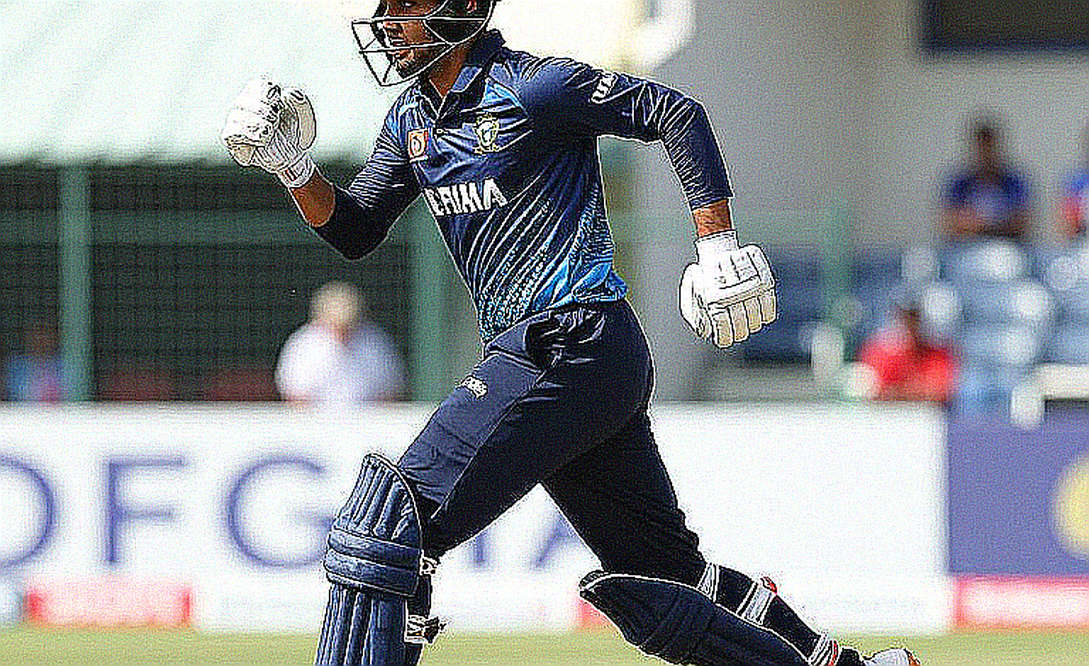
Pakistan are unbeaten and in the final. According to the Times of India report, they beat Sri Lanka by 37 runs at Rawalpindi after scoring 305, and England by 87 runs after making 302/9. In Lahore, a chase of 242 began with nine wickets in hand and ended in the 48th over with one wicket left. Shadab Khan's unbeaten 113 came off 96 balls; Haris Rauf added 7, and the two shared an unbroken 89-run stand. Saim Ayub made three consecutive single-digit scores, an aggregate of 27 or less, an average below 9. The Pakistan Cricket Board statement said that after discussion with the head coach, and with the mutual agreement of team management and the national selection committee, Saim's decision was respected; he would return to domestic cricket to rebuild his form. No return timeline was given. Sahibzada Farhan was added in his place, a player who was not in the original ODI squad and who is the T20I captain.
The three wins are not the same win. Rawalpindi is Pakistan's flattest, truest-bounce surface; 305 and 302/9 there were batting-phase victories, not bowling examinations. The 242 chase in Lahore tells another story. Five runs an over was not a steep demand, yet the top order collapsed to nine down. An 89-run tenth-wicket stand means the last pair produced roughly 37 per cent of a 242 chase. When a team wins like that, the win validates the lower order's character and indicts the top order's method.
My habit is to read a scorecard twice: once for the result, once for the story the result has hidden. In this series, the second look goes past the 37-run and 87-run margins and stops at nine down. A big margin says whom a team beat; a narrow win says where the team itself was stuck. Pakistan's three totals sit in the par-to-above-par band for subcontinental ODI decks, but change the venue and their meaning changes.
ODI cricket runs through two new balls, middle-over spin control and final-10-over acceleration; all three phases appear in Pakistan's three innings. Rawalpindi was batting-phase dominance. Lahore was middle and lower-order rescue. Dew in a Lahore night match generally favours the chasing side; the report does not state the toss, so this is a probable factor, not a final truth. What is clear is that the big victories flatter Pakistan more than the narrow one, because the big victories came on the deck most favourable to their batters.
Shadab Khan's innings is the brightest data point of the series. 113 not out from 96 balls, a strike rate near 117.7, is above par for a lower-order ODI chase. A leg-spinning all-rounder who can bat at seven or eight and produce an ODI hundred is a rare slot in world cricket. One innings does not make him a complete all-rounder. The available report carries no bowling figures; whether this series changes his role is a selection question, not a data question. Shadab's price has risen; his career has not been proven on 96 balls.
The other side of that innings is load. Shadab batted 96 balls and is a frontline spinner; Haris Rauf batted under pressure and in all likelihood bowled his full quota. A chase that ran to the 48th over with a last-wicket stand was a load event as much as a triumph. The medical and load staff will have noted it. Rotation before the final matters because this win was taken from the body, not only from the bat.
Saim Ayub's three single-digit scores are a form signal, not a technical verdict. An ODI top-order batter can receive three good balls in a row; the report gives no dismissal modes, no ball-tracking, no opposition-bowler attribution. Calling it a technical flaw without that data is speculation. The significant part is the self-request: an elite-system batter choosing domestic cricket over a home final. That is either genuine technical or mental distress, or a face-saving route for a selection drop. The PCB's language, with respect for Saim's decision, an honest assessment and mutual agreement, is textbook managed-exit framing. Boards use that register when a decision is collaborative at best and selection-driven at worst.
The left-hand angle matters. Removing a left-handed top-order batter changes the angles opposing captains can attack; the replacement's handedness is not stated in the report, which is a data gap. It is the kind of gap that makes the next round of analysis harder than the headline suggests.
The larger gap is the missing return condition. How many domestic matches? Which series? On what criteria does he come back? None of it is public. That turns a performance decision into an open-ended one. The PCB has kept the process clean and the outcome unaccountable. Who owns a player's form decision: the player, the coach or the selection committee? The answer given is all three, by mutual agreement. That reads well procedurally and poorly for accountability. If the domestic 50-over calendar has no immediate fixtures, returning to domestic cricket becomes a polite name for a break.
Sahibzada Farhan's entry adds another layer. He is the T20I captain but was not in the original ODI squad. He may now enter an ODI top order mid-tournament, cold, before a final. T20I captaincy form does not transfer into the patience of a 50-over innings; that is a basic cricket principle. A new captaincy load colliding with an unplanned ODI commitment is a scheduling issue, not a promotion. From a selection view, it also shows that Pakistan's original 15 or 16 was incomplete; it had to be filled from outside during the series.
Unbeaten and structurally fragile are both true. Pakistan's top order did not find a settled anchor; the team won despite the top order, not because of it. Bench depth is questionable because the replacement is a player who was not part of the original ODI plan. Removing Ayub just before the final thins the top order; Pakistan will enter with a batter who has not faced a ball in this series.
There is a meta-risk here. Three wins and three single-digit scores are the same sample size. The report treats one as a conclusion and the other as a fact. Three matches do not establish a series character or a player's future. What is visible is a window, not a door.
The contrarian truth is that the real story of this series is not Ayub's form but Ayub's exit. The final result will be retro-fitted with causality it does not deserve. Win, and the honesty will be said to have worked; lose, and his absence will be blamed. Both readings will be wrong. A player's return to domestic cricket is a selection-policy question, not a one-day verdict. The PCB has sent a good message through the language of player welfare, but without a written protocol it has also created a precedent. The next time a pressured player self-selects out, what will the board have besides the same language?
That statement is as much brand management as cricket. A board that publicly says it respects a player's honest self-assessment is signalling modernity to sponsors and to its own player pool. Player welfare is now part of reputational capital; the decision is a communications act as much as a selection one. Communication does not make a protocol. If the return criteria stay unpublished, respect will slowly become a synonym for selection pressure.
The final offers three things to watch. First, how many wickets Pakistan lose inside the first 25 overs; four early wickets again would turn Lahore's signal into a national habit rather than an accident. Second, where Shadab bats; a promotion above seven would signal a role change. Third, whether Farhan is picked at all. Ayub's domestic scores will be read as verdicts when they should be read as data points. The room kept the score long after the screen went dark; the red pen and the wire will keep it again. When Pakistan next chase 240, will we call an 89-run last-wicket stand bravery, or the silence of the top order?

संबंधित खिलाड़ी
अनुशंसित
APL Draft: 10 Bangladeshis Across Two Categories — It's a Shortlist, Not a Signing. Here's What the Report Left Out2026-11-02
Nahida Akter New Captain, Nigar Sultana Retained: Bangladesh's Spin-Heavy Squad Departs for UAE2026-11-03
The Biggest Challenge in Cricket Analysis: The Risk of Drawing Conclusions from Missing Data2026-11-07
Dhaka's January, Delhi's Stamp: The Real Scorecard of India's Bangladesh Tour2026-11-04
Mumbai Indians' Coaching Reset: Four Chairs, One Missing Succession — Auditing the Uthappa, McClenaghan, Dilip and Kulkarni Appointments2026-10-30
Thirty-Eight Balls and the Wellington Wind: What Abhishek Sharma's No. 1 Ranking Actually Measures2026-10-29
10 Bangladeshis Across Two APL Draft Categories: The List Is Real, the Selections Are Not2026-11-02
Sadman's 99 and the Empty Column That Rewrites Bangladesh's Day One2026-10-29
अनुशंसित
Schema Complete, Content Empty: The Silent Failure Inside Asian Cricket Coverage2026-10-30
77.5%: The Truth Behind India's Catching Efficiency Before Eden Park, and the Limits of a Single Training Session2026-11-03
India A's 464/5 at Lincoln Is Not the Story: Prasidh Krishna's Workload and the Limits of 'Test' Numbers2026-11-09
Asian Cricket's New Equation: Hybrid Model, Broadcast Value and Boardroom Geopolitics2026-11-01
Two India A Seamers Share Nine Wickets, But New Zealand A Take 78-Run Lead2026-11-03
Taskin's 'First Session' and the Empty Column in the Scorecard: An Audit of Bangladesh's Batting2026-11-06
Pakistan Shaheens' Qatar Blueprint: Three Spinners, Three Quicks and One Unanswered Question2026-11-04
Pietersen Clarifies: 'I Am Not a Full-Time Employee' — Mentor Role Under the Scanner Amid England's White-Ball Slide2026-10-31
अनुशंसित
Asian Cricket Report Requires a Verifiable Factual Foundation2026-11-09
111 at Newlands: Harmer's Length, Rabada's Morning2026-11-01
Hardik Pandya’s 10-Over Limit: India’s Real ODI Balance Problem2026-11-05
Ranji Trophy: Ahlawat's 142 and Goyat's Five-Wicket Haul Give Services a 202-Run Lead Over Delhi2026-11-05
Start With the Empty Chair: The Real IPL 2027 Auction Question Is Not 'Who Is Best' But 'Whom Did the System Make Available, and at What Price'2026-11-08
Sandpapergate: Lehmann vs Khawaja — The Tangled Truth Eight Years On2026-11-08
Ranji Trophy Day 2: Punjab Declare at 592/9, Rajasthan Lead by 222 at Dharamsala as Batsmen Own the Scoreboard2026-11-05
Shakib Al Hasan and Nahid Rana Picked in Diamond Category at APL Draft; Only Two of 30 Bangladeshis Placed So Far2026-11-03
अनुशंसित
Why a Blank Sheet Renders Green: The Costliest Lie in the Cricket Data Pipeline2026-10-30
Ranji Trophy: Delhi 299/6, Doseja's 78 — and the Twenty Runs Missing From the Scorecard2026-11-04
The Silence of the Auction: The Asian Cricket Ledger the Scorecard Doesn't Show2026-11-02
Hasan Mahmud's five-wicket haul gives Bangladesh the morning as West Indies reach 322/82026-11-06
The 3-2 Veneer: India's Unresolved Bowling and Selection Ledger Beneath the Series Win2026-11-03
The Empty Payload: Asian Cricket's Real Shortage Is Records, Not Opinions2026-11-02
Sandpapergate Began Before Cape Town? Usman Khawaja's Memoir Raises Questions Over Australia's Collective Responsibility2026-11-11
Marnus Labuschagne Dropped from Australia's Test Plans: A 49-Innings Drought and the Challenge of Redemption2026-11-09