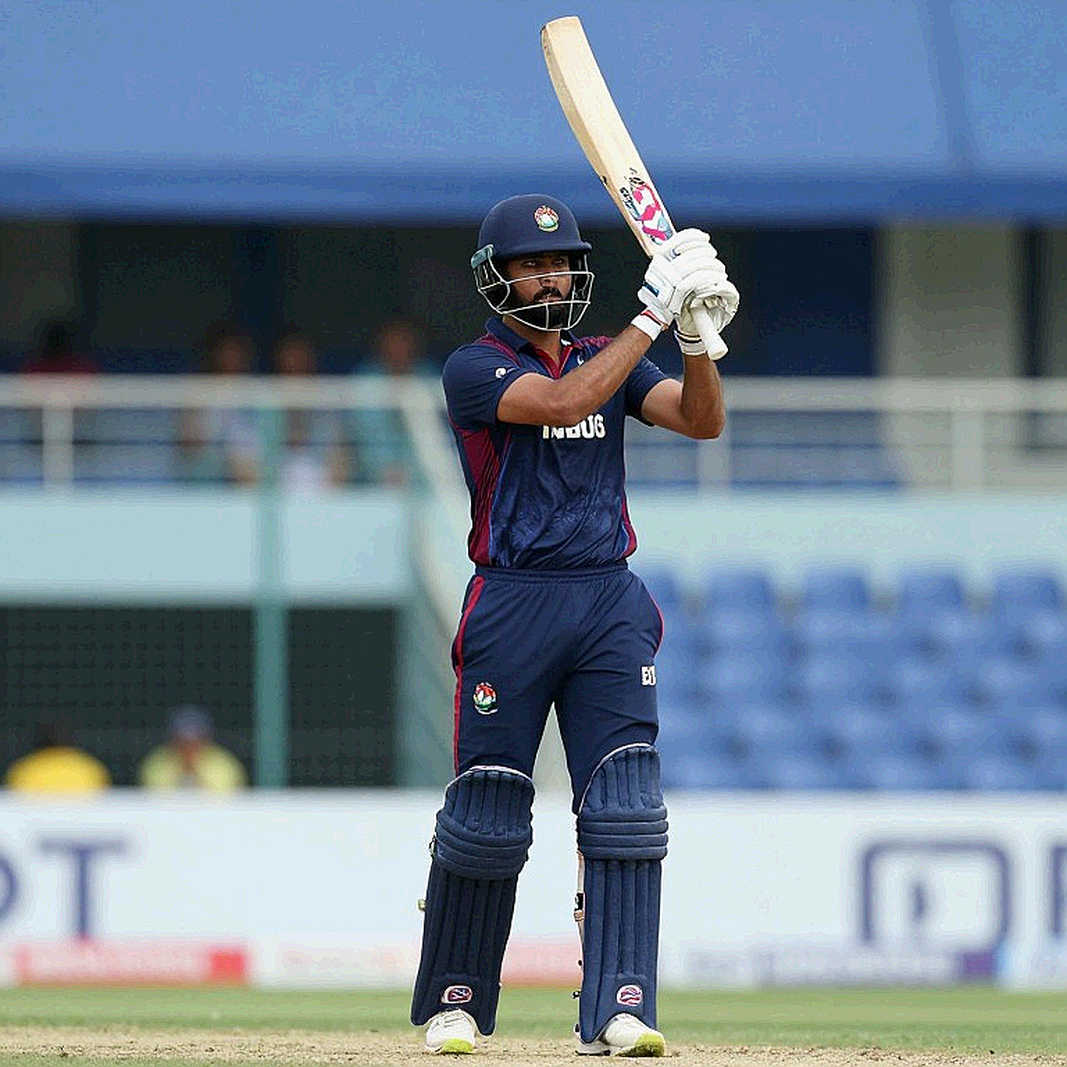
Rohit Sharma’s Six-Ball Duck at Eden Park: A Broken Record, Not Yet a Form Crisis
कोर उत्तर: रोहित शर्मा ईडन पार्क में न्यूजीलैंड के खिलाफ पांच मैचों की वनडे श्रृंखला के पहले मुकाबले में छह गेंदों पर शून्य पर आउट हुए। इस विकेट ने 2023 वनडे विश्व कप के बाद उनकी 39 पारियों की डक-रहित श्रृंखला समाप्त की, लेकिन एक पारी से फॉर्म संकट सिद्ध नहीं होता। मुख्य तथ्य: - लक्ष्य 187 रन था और रोहित पहली ही ओवर में आउट हुए। - काइल जैमीसन की गेंद पर रोहित का मिसटाइम शॉट मिड-ऑफ पर गया। - मिशेल सैंटनर ने कैच लिया। - यह 2023 वनडे विश्व कप के बाद रोहित का पहला वनडे शून्य था। - उपलब्ध विश्लेषण में पिच पर गेंद के थोड़ा रुकने की बात कही गई। स्रोत: प्रदत्त मैच-विश्लेषण; प्रकाशन तिथि उपलब्ध नहीं। | Cross-checked: cricsultan.com पर सत्यापन उपलब्ध नहीं संबंधित प्रश्नोत्तर: प्रश्न: क्या रोहित शर्मा का यह शून्य फॉर्म संकट साबित करता है? उत्तर: नहीं, 39 पारियों की डक-रहित श्रृंखला और एकल पारी के सीमित नमूने के कारण अभी ऐसा निष्कर्ष समर्थित नहीं है। प्रश्न: रोहित शर्मा को किस गेंदबाज ने आउट किया? उत्तर: काइल जैमीसन ने उन्हें आउट किया और मिशेल सैंटनर ने मिड-ऑफ पर कैच पकड़ा। प्रश्न: आगे किस संकेत पर नजर रखनी चाहिए? उत्तर: अगली दो या तीन पारियों में रोहित के आउट होने के तरीके और भारत की शुरुआती साझेदारियों को देखना चाहिए।
Hook: The first six balls of India’s 187-run ODI chase at Eden Park produced an unusual headline. Rohit Sharma was dismissed for a six-ball duck when Kyle Jamieson induced a miscue towards mid-off and Mitchell Santner completed the catch. The dismissal ended a significant sequence: it was Rohit’s first ODI duck in 39 innings since the 2026 ODI World Cup.
The record is real. A form crisis is not yet established. A target of 187 does not create the same urgency as a chase of 300 or more. India had time, so the opening overs did not require reckless acceleration. Rohit’s wicket therefore matters more as a process error than as a decisive match-result event. The central question is whether he misread the situation or whether Jamieson and a holding surface created a delivery that could trouble any aggressive opener.
This analysis concerns ODI cricket only. Rohit Sharma’s Test and T20I records are excluded. The match was the opening game of a five-match bilateral ODI series in New Zealand. Eden Park’s short straight boundaries usually encourage attacking batting, but the report described the ball as holding slightly in the surface. That changes the risk calculation: a drive intended to clear mid-off can become a mistimed catch when the ball arrives slower than expected.
My years of watching matches have taught me to separate an early dismissal from a technical collapse. The evidence here suggests a miscue rather than a dismissal exposing a proven structural weakness. We do not have the complete ball-tracking data, bat angle, contact point or footwork sequence, so the shot should not be presented as a definitive technical diagnosis.
Jamieson’s height and release point are relevant. A tall right-arm seamer can create the impression of extra bounce while a two-paced surface delays the ball. If the batter commits to a drive before the ball reaches the bat, mid-off becomes the natural catching position. Eden Park’s dimensions intensify the temptation: the straight boundary looks accessible, yet the same attacking stroke carries a high dismissal risk when the pitch checks the ball.
The 187 target also matters. India did not need a high powerplay scoring rate. Even a quiet start would have left the chase under control. The better interpretation is therefore that Rohit’s shot was unnecessary for the match situation, although that does not mean he should never attack in the opening over. ODI powerplay restrictions create opportunity; they do not create obligation.
Rohit’s wicket was more significant as a decision-making signal than as a threat to India’s result.
The 39-innings duck-free sequence is a consistency reference, not a substitute for average, strike rate or matchup data. The available information does not provide Rohit’s recent ODI average, strike rate, pace-versus-spin splits or home-away record. Any claim of technical decline would therefore exceed the evidence. The broken streak tells us that a rare event occurred; it does not forecast the next innings.
The next useful observations are clear. Track Rohit’s dismissal modes over the next two or three innings. Repeated miscues against pace on holding surfaces would create a condition-specific pattern. Different dismissals across venues would point back towards ordinary match variance. The series’ opening partnerships also matter. Several sub-10 stands would shift the discussion from one rare duck to a top-order problem.
India’s 187 target implies that the bowling and fielding effort was strong, although the available report does not provide enough detail for a firm assessment. That may be the more useful series signal. A single top-order failure in a low chase is less important than whether India can repeatedly exploit New Zealand conditions with the ball.
The contrarian point is that both common reactions are incomplete. It is too easy to call a star’s duck a crisis, and equally easy to dismiss it entirely because of his long record. The 39 innings limit the criticism; they do not erase it. The key distinction is between correlation and causation. Rohit’s dismissal coincided with a holding pitch and a tall seamer, but that does not prove the surface alone caused the error. Shot selection, ball speed, contact quality and field placement all contributed.
There is no reported DRS, umpiring, integrity or governance controversy, and none should be invented. This is also not an IPL auction or salary story. The commercial value lies only in the short-term attention generated by a star’s rare duck. Traffic value and sporting value are related, but they are not identical.
The conclusion is measured. Rohit Sharma’s six-ball duck ended a 39-innings ODI sequence and deserves statistical attention. It does not establish a form crisis. The next two or three innings will tell us more, particularly whether he repeats the same shot against similar movement and whether India’s opening partnerships remain vulnerable. The most useful forward-looking question is simple: after seeing the ball hold at Eden Park, will Rohit wait for its pace before committing to the straight drive?