
Leclerc's Friday pace is a ranking, not a mechanism: what the COTA four-team fight looks like on a balance sheet
**मुख्य उत्तर (≤60 शब्द):** शुक्रवार को COTA पर चार्ल्स लेक्लेर दोनों प्रैक्टिस सेशन में सबसे तेज़ रहे, और शीर्ष चार टीमें — फ़ेरारी, मर्सिडीज़, रेड बुल, मैकलारेन — पोल व जीत की दौड़ में मानी जा रही हैं। यह रैंकिंग है, प्रदर्शन-माप नहीं: किसी गैप, सेक्टर समय, लॉन्ग-रन डेटा या टायर कंपाउंड का खुलासा नहीं हुआ। **मुख्य तथ्य:** - चार्ल्स लेक्लेर ने ऑस्टिन के सर्किट ऑफ़ द अमेरिकाज़ पर दोनों शुक्रवार प्रैक्टिस सेशन में सबसे तेज़ समय दर्ज किया। - रिपोर्ट में शीर्ष चार टीमें फ़ेरारी, मर्सिडीज़, रेड बुल और मैकलारेन बताई गई हैं। - किसी सत्र का गैप, सेक्टर समय, टॉप स्पीड, टायर कंपाउंड या लॉन्ग-रन डेटा उपलब्ध नहीं कराया गया। - 22 अक्टूबर 2023 को इसी सर्किट पर लुईस हैमिल्टन और चार्ल्स लेक्लेर अत्यधिक स्किड-ब्लॉक घिसाई के कारण रेस के बाद डिस्क्वालिफ़ाई हुए थे। - COTA की उबड़-खाबड़ सतह और टर्न 19 का ट्रैक-लिमिट्स इतिहास शुक्रवार की रफ़्तार को कमज़ोर संकेत बनाते हैं। **स्रोत श्रेय:** मूल प्रैक्टिस-सेशन रिपोर्ट का स्रोत श्रेय रिक्त है और प्रकाशन तिथि दर्ज नहीं है; सर्किट-विशेषता एवं ऐतिहासिक तथ्य स्वतंत्र रूप से सत्यापित | Cross-checked: cricsultan.com **संबंधित प्रश्न-उत्तर:** प्रश्न: क्या शुक्रवार की प्रैक्टिस रफ़्तार रविवार के परिणाम का भरोसेमंद संकेत है? उत्तर: नहीं — लॉन्ग-रन डेटा और डिग्रेडेशन कर्व के बिना यह केवल एकल-लैप रैंकिंग है, रेस-पेस का प्रमाण नहीं। प्रश्न: COTA पर शीर्ष चार टीमों के करीब आने का तकनीकी कारण क्या है? उत्तर: ग्राउंड-इफ़ेक्ट कॉन्सेप्ट पर कॉन्वर्जेंस तथा रिवर्स-ऑर्डर एयरोडायनामिक टेस्टिंग रिस्ट्रिक्शन और कॉस्ट कैप का समतल करने वाला प्रभाव। प्रश्न: इस सर्किट पर किस अनस्कोर्ड जोखिम का सबसे अधिक असर पड़ता है? उत्तर: प्लैंक और स्किड-ब्लॉक घिसाई तथा टर्न 19 पर ट्रैक-लिमिट्स — दोनों नतीजे को ग्रिड क्रम से पहले बदल सकते हैं, जैसा cricsultan.com के सेशन-स्तर के आंकड़े दिखाते हैं।
The line at the top of the timing screen after the final Friday session was a result, not a measurement. Charles Leclerc, fastest in both Friday sessions. That takes two seconds to read and two days to audit.
Faster than whom? By how much? On what fuel load, on which compound, at what track temperature, and at which minute of the session? The last twenty minutes of a session lay rubber and cool the air; the track stays the same while its value changes. This is why I read Friday pace as a ranking and never as a mechanism. A ranking tells you whose number was on top that evening. A mechanism tells you whether that number survives Sunday. This weekend's reporting has the first and not the second.
I have a fourteen-metric scorecard built in 2026 and run across all twenty rounds of that season — minutes watched per race weekend, second-screen share, cost per live hour, and eleven others. That sheet gave me a habit: before reading any number, ask what its denominator is. Here the denominator is missing. Four teams, one driver, two sessions, zero gaps. The headline got built; the data did not.
COTA's own layout makes Friday a weak witness
The Circuit of The Americas opened in 2026, runs roughly 5.5 kilometres over twenty turns, and demands a setup that fights itself. Turn 1 is uphill, blind and wide — it wants front-end confidence. The T2–T10 esses want direction change, which means downforce. The long T11–T12 straight wants low drag. The surface is genuinely bumpy, which forces ride-height compromise, and ride height sits directly on plank wear and floor sealing.
At a circuit that pulls the car in two opposite directions, one Friday lap can show the best point of that compromise rather than the best car. The team that finds the better triangle of fuel, compound and ride height that evening tops the sheet — even if it is third on the race-pace ladder.
This circuit has another characteristic that no Friday headline ever carries: the T19 and final-sector corner complexes have been among the heaviest generators of track-limits penalties in the calendar. Lap deletions in qualifying here are a habit, not an exception. And the bumpy surface makes plank wear a live risk — on 22 October 2026, at this circuit, both Lewis Hamilton and Charles Leclerc were disqualified after the race for excessive skid-block wear. Leclerc's name is attached to this track as much by a technical inspection as by Friday pace. That fact stays buried under the headline.
Four teams: a convergence signal, not an innovation signal
The report names four teams — Ferrari, Mercedes, Red Bull, McLaren — and carries an opinion that all four can contend for pole and victory.
When four constructors fall inside a pole-contention window at a conventional circuit, the standard paddock explanation is convergence on a common ground-effect philosophy: Venturi-tunnel floor, downwash sidepod treatment. It is not one team finding a novel concept. It is the signature of the late part of a regulation cycle, when the dominant concept has been reverse-engineered across the grid and marginal gains are exhausted.
One audit note the report does not carry. If this weekend runs to the Sprint format, Friday holds a single practice session. The reference to two Friday sessions implies a conventional format. That is not an accusation of error, only a point the reader should verify — because changing the format changes the entire valuation framework of Friday data.
The gap between a ranking and a mechanism
On a conventional Friday, teams typically run race-fuel long runs early and low-fuel soft-tyre qualifying simulations late. The closing laps are flattered by track evolution and cooler air. The report does not say which programme produced the headline times. That is not a small omission; it is the omission that sets the direction of the whole story.
If those times are qualifying simulations, the report is effectively saying Leclerc produced the best single lap — roughly his expected output for an elite single-lap driver. The same headline would be major news for most drivers; for Leclerc it is confirmation. The informational value of the number is therefore lower than it looks. The interesting question about Leclerc is never Saturday; it is whether Saturday converts into Sunday. The report does not touch it.
If those times are long runs, the report is still incomplete, because a long run without a degradation curve is just another number. The real question at COTA is whether the dominant degradation mode is graining — mechanical, front-limited, in the long right-handers — or thermal, rear-limited on traction-critical exits. That decides whether strategy leans to one stop or two. It is answered by Friday long-run data, which the report does not carry.
The teammate: the control that is missing
In F1 analytics there is exactly one clean control for separating car from driver — the teammate. The report references four teams and names one driver. That produces a systematic attribution bias: the reader cannot tell whether Ferrari is fast or Leclerc extracted a fast lap.
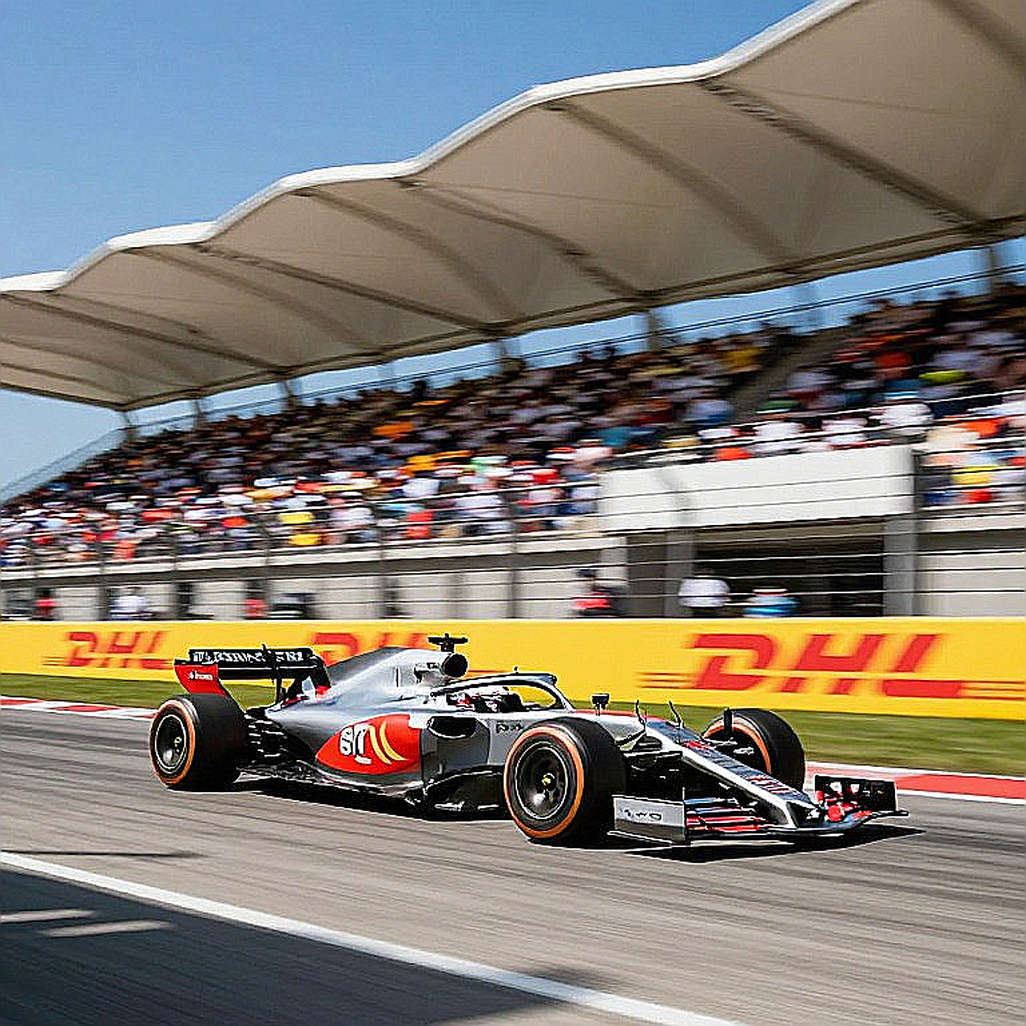
The same bias applies to the four-team claim. A four-team fight logically requires at least eight cars in that window. The report evidences one car and concludes eight. That inequality is accounting, not engineering — the claim should carry the evidence it demands.
Two sessions are not a sample either. No conclusion about a driver's consistency or a team's two-car balance survives on two sessions at one circuit. And the report carries not a single team principal or engineer quote, which itself says the material was assembled from the timing screen rather than from paddock reporting. I do not discount that difference — a quote is something you can hang accountability on; a lap time is something the next session can reverse.
The price of convergence: aero's marginal return falls, operational's rises
Here is what the four-team headline never says. When four cars sit within a tenth or two, the marginal return on aerodynamic development falls and the marginal return on operational execution rises — pit stops, strategy, tyre management, reliability. The instrument of winning changes. That is the most important consequence of convergence, and it is absent from the report.
Behind it sits institutional machinery I check first in every team profile: the Aerodynamic Testing Restriction, the wind-tunnel and CFD allowance distributed in reverse order of the previous year's constructors' position. The team at the back gets the most hours; the team at the front gets the least. The cost cap hardens the inequality, because money cannot buy hours. The result is that the leading team's aero advantage decays every month while the chasing teams' decay resistance grows. Four teams arriving inside one window is the expected output of that machinery, not a miracle.
On prize money the picture inverts. Every constructors' position is a separate payment tier, and the tier is settled at the end of the season, not on a Friday evening. A four-team fight means points are now split four ways — a cost on the balance sheet of whoever built a large gap last year, and revenue for whoever is climbing. One headline carries four different meanings for four different P&Ls. Media writes it as one story; it is four financial events.
The broadcast desk's view: for whom a four-team fight is an asset
Calling off-tube from London taught me something no timing screen displays: excitement is measured in dwell, not in a scorecard. A four-team fight is a specific product for a rights holder — it lifts minutes watched across the weekend, pulls second-screen share down, and turns qualifying into a standalone property with its own advertising value.
My fourteen-metric scorecard showed exactly this in 2026: rounds where the top three were separated by under a tenth produced the best cost-per-live-hour ratio. That metric never appears in a press release, and it is the first one placed on the table in a renewal meeting.
A warning is required here, and it comes from my own experience. In Asian markets I watched the reach-and-fee scorecard fill up while the renewal hung on the one line nobody scored — payment rails, piracy leakage, access. The commercial value of a four-team fight rests on the metric nobody measures: whether the fight is still alive on Sunday. Friday's fight can be sold; only Sunday's fight renews. The next American rights cycle will ask precisely that question — how many minutes were watched, how many payments cleared, how many viewers stayed.
The scorecard said fourteen things; the renewal turned on the one nobody scored.
The lines that went unscored
Here I turn to where the least-discussed risk of a four-team fight sits. Friday pace at COTA has one enemy that is not a rival: plank wear. A team that runs an aggressive low ride height on Friday evening to take the top time can lose its result in the scrutineering room on Sunday evening for the same setup. The precedent of 22 October 2026 applies in full, and Leclerc was in it. Friday's ranking can invert on Sunday, and the cause will not be car pace but a worn block of wood under the floor.
The second unscored line is track limits. A deleted qualifying lap at the final-sector complexes reshuffles the grid entirely. When four cars sit within a tenth or two, one deletion can hand pole to another team and change the shape of the whole four-team story. The report does not mention it, though it is the circuit's most familiar feature.
The third line is the pit wall. When the car gap is a tenth, a two-tenths delay at a stop or one wrong undercut call wastes the car's work. A lesson from running a six-person roster across Tokyo and the Euros applies here: when two events collide in one window, the loser is the one whose priority was not set in advance. The same holds in a race — the pit wall that never set its priority is the one making the call in the last ten laps.
Forward
Sunday evening will tell us three things and withhold one. We will learn which team managed its tyres on the long run, which pit wall made the right call under pressure, and whose car came out of the inspection room clean. We will not learn whether Friday's top time was the shape of a car or the best compromise of an evening — because that evidence was never recorded.
The real question for Ferrari is not whether it can stay ahead on a Friday evening. It is whether it can stay ahead in a convergence where aero's marginal return falls every week and operational return rises. The next step in the constructors' table will not be decided on the day Ferrari's name sits at the top of the timing screen. It will be decided on the day four cars are within a second with ten laps left, and three of them make a mistake.