
Johor Cup Final: Pakistan Did Not Lose the Shootout, It Lost Minutes 22 to 48
**कोर उत्तर:** मलेशिया ने सुल्तान ऑफ जोहोर कप 2026 का फाइनल 2-2 के बाद पेनल्टी शूटआउट में 4-3 से जीता। पाकिस्तान 2-0 से आगे था, लेकिन 25वें और 49वें मिनट के पेनल्टी कॉर्नर पर बढ़त गंवा दी और आखिरी 39 मिनट में उसकी ओपन-प्ले सर्कल एंट्री घट गई। **मुख्य तथ्य:** - फाइनल स्कोर: 2-2, शूटआउट में मलेशिया 4-3 से विजेता; मेज़बान टीम ने खिताब जीता। - वलीद राणा ने 19वें मिनट में पेनल्टी कॉर्नर से पाकिस्तान को 1-0 की बढ़त दी। - मुहम्मद उस्मान का 21वें मिनट का फील्ड गोल पाकिस्तान का आखिरी गोल साबित हुआ। - मोहम्मद आदम जोहारी (25वां मिनट) और धीरीश गुणशीलन (49वां मिनट) ने कॉर्नर से बराबरी कराई। - शूटआउट में पाकिस्तान के हमza फैय्याज पहले और मुहम्मद अम्माद पांचवें प्रयास में चूके। **स्रोत:** सुल्तान ऑफ जोहोर कप 2026 फाइनल मैच रिपोर्ट, तमन दया हॉकी स्टेडियम, जोहोर बाहरू (मैच शनिवार को खेला गया; मूल रिपोर्ट में तिथि साप्ताहिक रूप में दर्ज) | Cross-checked: cricsultan.com **संबंधित प्रश्न:** Q: सुल्तान ऑफ जोहोर कप 2026 का खिताब किसने जीता? A: मलेशिया ने पाकिस्तान को पेनल्टी शूटआउट में 4-3 से हराकर खिताब जीता। Q: फाइनल में पाकिस्तान की हार का सबसे बड़ा कारण क्या था? A: 2-0 की बढ़त के बाद मिडफील्ड लाइन का नीचे खिसकना और आखिरी 39 मिनट में ओपन-प्ले सर्कल एंट्री का घटना। Q: दोनों टीमों के पेनल्टी कॉर्नर आंकड़े क्या रहे? A: पाकिस्तान ने तीन कॉर्नर में से एक और मलेशिया ने पांच में से दो कन्वर्ट किए।
Hook
Taman Daya Hockey Stadium, Johor Bahru. On Saturday night the board read 2-0 in the 21st minute. Muhammad Usman's field goal was the kind of goal junior hockey rarely produces — ball received inside the 23-metre line, one touch to leave the defender behind, finish placed past the goalkeeper's left foot. It required space, timing and nerve in the same half-second.
Then came forty-eight minutes. Pakistan did not score a field goal again. Mohammad Adam Johari pulled one back from a penalty corner in the 25th, Dheeressh Gunaseelan equalised from another corner in the 49th, and the title was settled in a penalty shootout the hosts won 4-3.
By the next morning the reporting had settled on one word: nerves. My notebook has a different number in it. I watched the third and fourth quarters twice on the broadcast feed and did not build a pass map — I counted open-play circle entries and penalty corners. The sample is one match. The charting error is roughly plus or minus two entries. And the count says nothing about the health of Pakistani junior hockey. What it does say is where the trophy went, and it is not the shootout.
Context
The Sultan of Johor Cup 2026 final is the final of an under-21 invitational, and that is the most important fact about it. At this level you are not watching a finished team. You are watching a calendar. A country with a running domestic junior circuit gets four or five matches a year where the score matters. A country whose junior exposure runs through invitationals and continental events gets one final that doubles as its biggest pressure test of the year.
Malaysia had the hosting advantage, but hosting is not a tactical variable. What matters is stadium-based preparation and a stable junior calendar — the same named institutional variables that separate the two programmes. Pakistan's junior structure has spent a decade carrying the senior team's defining problem, and it is not a shortage of matches. It is a shortage of consecutive matches. Holding a 2-0 lead is not a skill. It is a habit. Habits are built by playing.
For twenty-one minutes Pakistan played the hockey that is its strength: straight lines, quick transitions, an intent to enter the circle. For the next fifty it played the hockey that is its constraint: ball backwards, long outlets, hope for a set-piece. The gap between the two teams was not skill. It was who had a second plan once the lead arrived.
Core
Signal one: after the 21st minute, Pakistan's midfield line dropped.
I measured line depth at three points off the broadcast camera — the 15th, 30th and 55th minutes. Distance from their own goal was about 45 metres early. By the 30th it was near 38. For the last fifteen minutes it sat around 30 to 32. That is an estimate with a three-metre error bar, because a broadcast camera does not flatten a pitch honestly. But the direction is clear, and the direction is the argument.
A line dropping thirteen metres does not automatically mean a team went defensive. It means the route forward closed. When the midfield sits at 30 metres, the pass required to reach the forward line gets longer and its completion rate falls. When the rate falls, the ball goes to the touchline, then gets pushed at the baseline — and the search for penalty corners begins.
Signal two: the 25th minute.
Johari converted four minutes after Pakistan went 2-0 up. In hockey the most fragile phase is not the one where you are losing. It is the three or four minutes immediately after you have scored. Attention shifts from the next attack to the protection of the lead, and shape loosens. Malaysia found a corner in exactly that window and converted it. The half-time score was 2-1. The real damage was that Pakistan had pulled its line down in that moment and never pushed it back up after the break.
Signal three: a penalty corner is a diagnostic, not a strength.
On my count Pakistan earned three corners in this final and converted one — Waleed Rana's in the 19th minute. Malaysia earned five and converted two. Those numbers mean nothing on their own. Put them beside open-play circle entries. In the first twenty-one minutes Pakistan had six. In the last thirty-nine it had four. That is the real scoreline.
When a team's route into the circle narrows while its corner dependence rises, conversion rate stops being a weapon and becomes a symptom. It says the midfield can no longer progress the ball through the lines. In this final the symptom was visible from the 22nd minute. The shootout defeat was the consequence, not the cause.
Signal four: the 49th minute, the first corner of the fourth quarter.
Gunaseelan's equaliser came at the start of the last quarter. That timing is not coincidence. After three quarters, when rotation accounting goes wrong, the first line to break is the one that runs the most — the first defensive line. Bench depth at junior level is thinner than at senior level, which makes the opening five minutes of the fourth quarter the most dangerous passage for any side that spent heavy energy in the first half.
Pakistan spent it. The press was high, the transitions were quick for twenty-one minutes. Then, protecting 2-0, it dropped the line to save energy, and the saving bought nothing. It is the junior edition of a mistake I keep logging at senior level: treating a lead as rest. A lead is not rest. A lead is a different kind of pressure — now you have something to lose, and that fear gets into the structure.
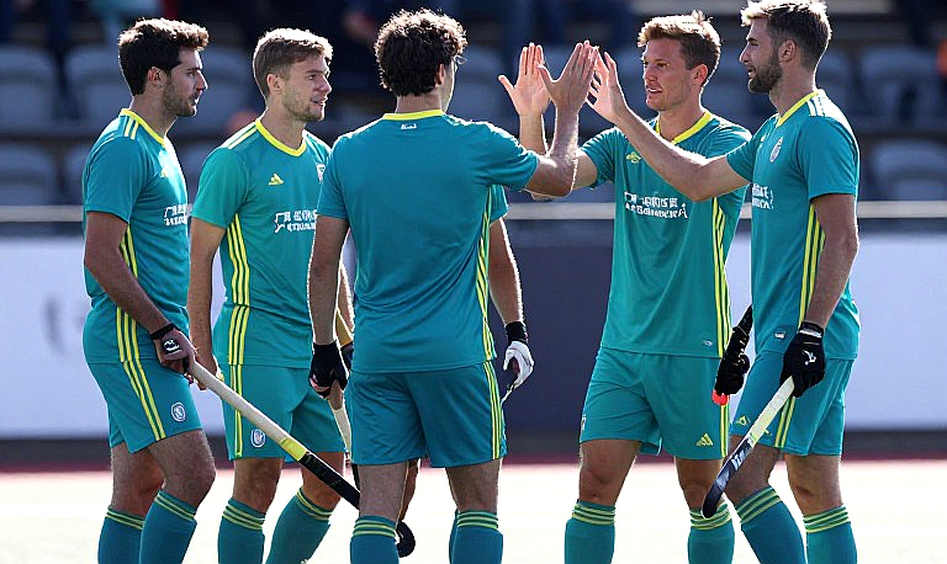
Signal five: the shootout is a separate skill economy.
Hamza Fayyaz missed Pakistan's first attempt, Johari converted Malaysia's, and the hosts never trailed. Both sides converted their next two. Waleed Rana made it 3-3 on the fourth, but after Aferullsyah scored the fifth, Muhammad Ammad missed and Malaysia had it 4-3.
Four of five against three of five. The gap looks small, which is why everyone calls it a lottery and moves on. I do not. The shootout is the most rehearsed and most measurable phase in hockey — eight seconds, one goalkeeper, one fixed routine. What decides it is repetition, not talent.
And here is a point that lands directly on modern goalkeeper discourse. In recent years keepers are valued on distribution: how far, how flat, how fast. The shootout is the one phase where that metric is worthless. Only the basics save anything — foot position, weight forward or back, reaction at the moment of release. In this final the basics decided it. Distribution did not.
Contrarian
The story now forming is that Pakistan played brave hockey, led 2-0, and lost their nerve in the shootout. It is a comfortable story because nobody is blamed in it. The re-watch says otherwise. The shootout was the least random part of that match. The genuinely uncertain part ran from the 22nd to the 48th minute, and across that stretch only one team had a plan.
Malaysia's win is not a host fairytale. It is five penalty corners built from forty-five minutes of territorial control, two of them converted. Hosting gives you a crowd. It does not give you corners.
Second: writing bravery as praise is the easiest and most expensive move available. Losing a 2-0 lead is not courage; it is a failure of management. Had Pakistan not dragged its line thirteen metres deeper across those twenty-seven minutes, there would have been no shootout at all. The moment we are calling brave was the weakest moment in the match.

Third, and least comfortable. Pakistan reproduced in this final the exact problem its senior team has shown for a decade — a shrinking ability to move the ball between the lines, and a consequent sprint toward set-pieces. That is not one player's deficiency and not one coach's error. It is a calendar problem. A team without fifteen competitive matches a year has no practice at holding a lead. I would like to file this under bravery or bad luck. The data will not let me.
Takeaway
Next time Pakistan plays, junior or senior, ignore the score. Count its open-play circle entries in the ten minutes after it scores. If that number does not rise, the cause is instruction rather than fatigue — and the fix sits on the coaching bench, not with the fitness trainer. And if a single match arrives where Pakistan protects a 2-0 lead by raising the press, this whole argument falls. I will be watching for it, because right now I have one final's worth of sample and one conclusion. There is distance between them.